
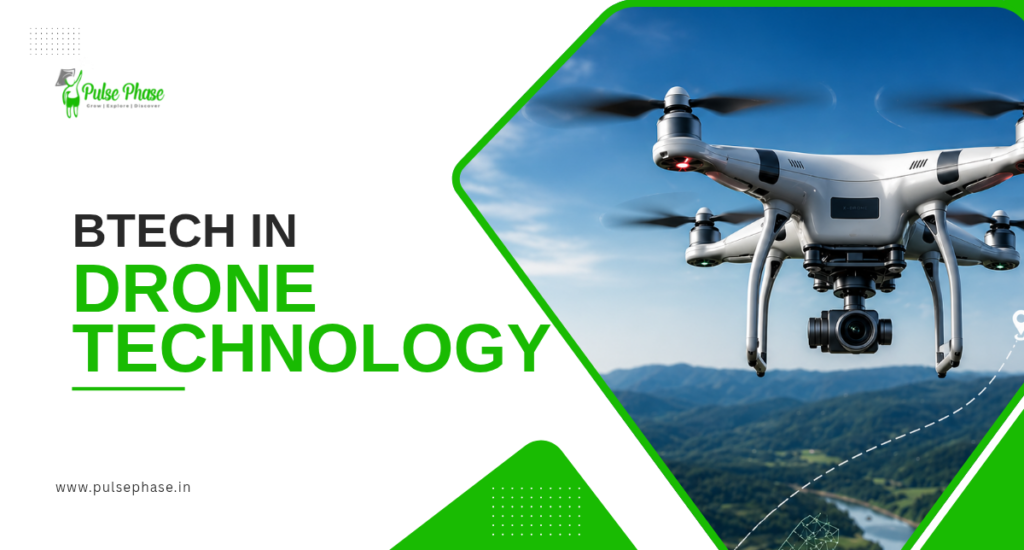
Introduction
B.Tech in Drone Technology is a specialized engineering program designed for students interested in UAVs, automation, and modern aerial systems. This article covers everything you need to know about B.Tech in Drone Technology, including eligibility, syllabus, fees, top colleges, and career scope. If you’re considering a future in India’s growing drone ecosystem, this guide will help you understand what to expect and how to get started.
What is B.Tech in Drone Technology?
A B.Tech in Drone Technology is a four-year undergraduate engineering program focused on the design, development, and application of Unmanned Aerial Vehicles (UAVs)—commonly known as drones. The course combines electronics, mechanics, programming, and AI to build systems that can operate remotely or autonomously.
B.Tech In Space Technology: Course Details, Eligibility, Fees, Colleges & Career Scope
What are UAVs (Unmanned Aerial Vehicles)?
UAVs are aircraft that fly without a human pilot onboard. They are controlled remotely or use onboard software for autonomous flight. Modern drones integrate sensors, GPS, cameras, and AI-based systems.
Industries Using Drone Technology
Drone technology is now used across multiple sectors:
- Agriculture (crop monitoring, spraying)
- Defense and surveillance
- Logistics and delivery
- Film and media production
- Infrastructure inspection
- Disaster management
- IIT Kanpur Review: Engineering Excellence Rooted In Depth
Why Drone Technology is Booming in India
Government Policies (Drone Rules)
India introduced liberalized Drone Rules 2021, simplifying licensing, registration, and usage. The government has also launched Production Linked Incentive (PLI) schemes to boost drone manufacturing.
Industry Demand
There’s rising demand for drone pilots, engineers, and data analysts due to increased adoption in agriculture, defense, and smart infrastructure.
Real-World Use Cases
- Crop health analysis using aerial imaging
- Border surveillance and security
- Medical supply delivery in remote areas
- Mapping and land surveys
- IIT Delhi Review: Academic Rigor At The Heart Of The Capital
Course Duration, Eligibility & Entrance Exams
Duration
- 4 years (8 semesters)
- Includes labs, projects, and internships
Eligibility
- 10+2 with Physics, Chemistry, Mathematics (PCM)
- Minimum 50–75% marks (varies by college)
Entrance Exams
- JEE Main
- JEE Advanced (for IITs)
- State CET exams
- University-level entrance tests
B.Tech in Drone Technology – Subjects & Syllabus
Year-wise Breakdown
1st Year: Basics
- Engineering Mathematics
- Physics
- Programming fundamentals
- Engineering drawing
2nd Year: Electronics + Programming
- Digital electronics
- Microprocessors
- Embedded systems
- Data structures
3rd Year: UAV Systems
- Flight dynamics
- Control systems
- Drone design
- Communication systems
4th Year: Practical + Projects
- UAV simulation
- Final-year project
- Industry internship
- AI-based drone applications
Core Subjects
- UAV Design
- Flight Dynamics
- AI & Computer Vision
- Embedded Systems
- GPS & Navigation Systems
- Robotics basics
Top Colleges for B.Tech in Drone Technology in India
Drone-specific degrees are still emerging, but several institutions offer relevant programs:
Government & Recognized Institutes
- Indian Institute of Technology Kanpur (drone research programs)
- Indian Institute of Technology Bombay
- Anna University
Private Universities
- Amity University
- Chandigarh University
- Jain University
Skill-Based Academies
- Drone training institutes certified by DGCA
- Specialized UAV training centers
- IIT Bombay Review: Innovation, Culture & The Mumbai Edge
B.Tech in Drone Technology – Fees Structure
Government Colleges
- ₹50,000 – ₹2 lakh per year
Private Universities
- ₹2 lakh – ₹5 lakh per year
Additional Costs
- Drone kits and components
- Software tools
- Certification courses (DGCA-approved training)
Career Scope After B.Tech in Drone Technology
Job Roles
- Drone Engineer
- UAV Pilot
- Drone Data Analyst
- Robotics Engineer
- GIS Specialist
Industries Hiring
- Agriculture
- Defense
- Logistics
- Infrastructure
- Media & filmmaking
- Surveying and mapping
Expected Salary After B.Tech in Drone Technology
Entry-Level
- ₹3 LPA – ₹6 LPA
Mid-Level
- ₹6 LPA – ₹12 LPA
Specialized Roles
- ₹12 LPA+ (AI-based drone systems, defense tech, R&D roles)
Skills Required for Drone Engineers
Technical Skills
- Electronics and circuit design
- Programming (Python, C++)
- Embedded systems
- CAD tools
Advanced Skills
- AI and computer vision
- Data analysis
- Sensor integration
Practical Skills
- Drone operation
- Flight safety protocols
- Maintenance and troubleshooting
Future Scope of Drone Technology in India
India’s drone ecosystem is expanding rapidly due to:
- Government incentives and policies
- Startup ecosystem growth
- Smart city projects
- Increased defense spending
Drone applications are expected to grow in delivery, surveillance, and automation sectors.
Drone Technology vs Robotics Engineering
| Feature | Drone Technology | Robotics Engineering |
| Focus | UAV systems and aerial tech | Automation and machines |
| Industry | Aviation, defense, mapping | Manufacturing, AI, robotics |
| Skill Set | Flight systems, navigation | Mechanical + AI systems |
| Scope | Emerging and growing fast | Established and broad |
Pros and Cons of Drone Technology Course
Pros
- Emerging and future-focused field
- Growing demand across industries
- Hands-on and practical learning
Cons
- Limited colleges offering specialization
- Requires technical and field skills
- Regulations may impact usage
How to Become a Drone Engineer (Step-by-Step)
- Complete 10+2 with PCM
- Enroll in B.Tech (Drone/Aerospace/Electronics)
- Learn programming and embedded systems
- Get DGCA-certified drone pilot training
- Work on UAV projects and internships
- Apply for jobs or pursue higher studies
FAQs
Yes, especially with growing demand in agriculture, defense, and logistics sectors.
Entry-level salaries range from ₹3–6 LPA, with higher growth in specialized roles.
IITs and top private universities with UAV labs and research programs are good options.
Yes, a DGCA-issued Remote Pilot Certificate is required for most commercial drone operations.
It is widely used in agriculture, defense, logistics, mapping, and media production.